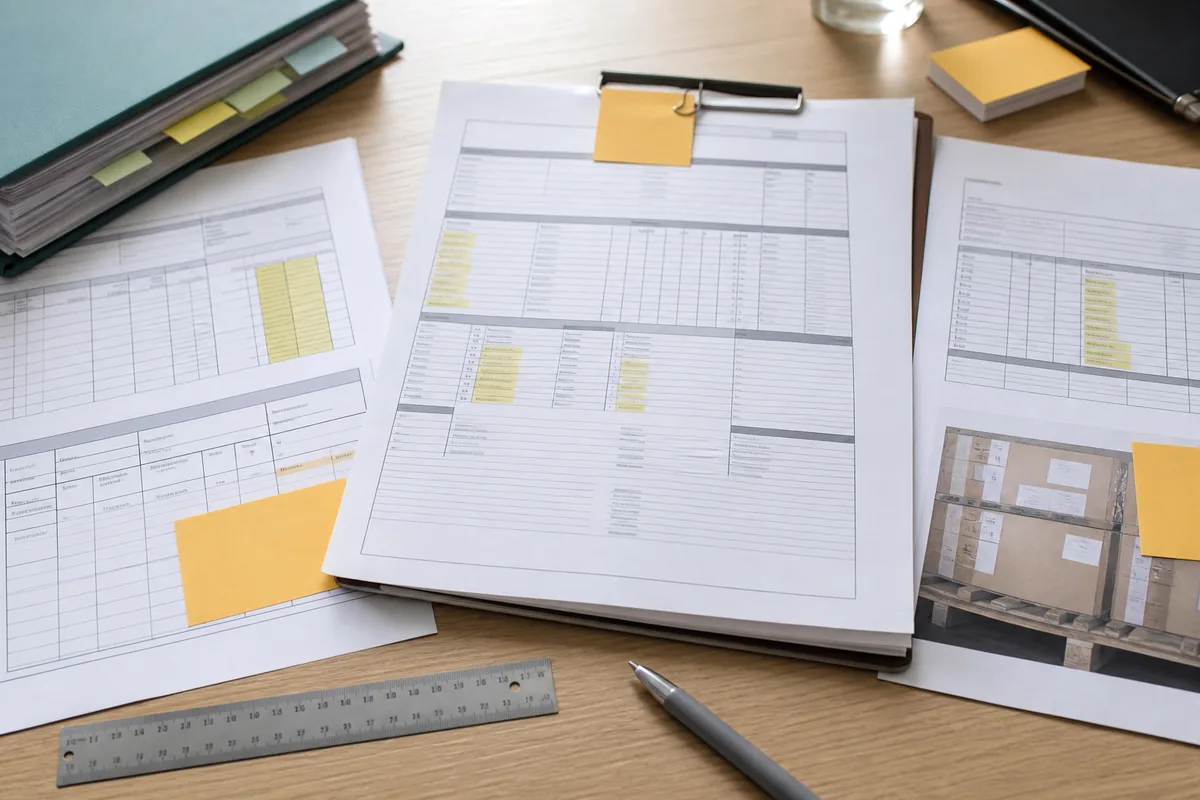
/ tooling credit / product price / invoice value

Tooling Credit Offset Against Product Price

Tooling credits offset against product price should be separated from unit value and ownership records.

Tooling Credit Offset Against Product Price is the kind of trade-file issue that looks small until another team needs proof. In the tooling credit offset against price file, the buyer is not trying to turn a normal order into a legal project. The buyer is trying to make one decision readable: whether the tooling credit changes product value, asset ownership, or supplier settlement. In the tooling credit offset against product price file, if that decision stays only in chat, the next person sees a folder with polished final documents and no record of the exception that shaped them.

Start with the document that created the pressure. For tooling credit offset against price, that document is usually near tooling invoice, credit note, product invoice, ownership clause, payment ledger, unit price, and supplier settlement note. In the tooling credit offset against product price file, put the current version beside the earlier version and mark the field that changed. In the tooling credit offset against product price file, the buyer should not accept a clean replacement file unless the folder also keeps the rougher file that explains why a review happened.

A supplier may apply unused tooling funds to product price while the buyer still needs clean product value and tooling ownership records. In the tooling credit offset against product price file, the supplier may have a workable reason, and the order may still be acceptable. The file still needs a concrete answer. In the tooling credit offset against product price file, ask who made the request, which document changed, which quantity or value it affects, and whether the answer applies only to this order. That record keeps tooling credit offset against price from becoming an invisible standing approval.

Use one control question before broker reply: can finance separate tooling settlement from goods value? In the tooling credit offset against product price file, if the answer takes more than a minute to explain from the folder, the file is not ready. The missing piece may be a revised invoice, company-role note, carton map, model-coverage statement, or customer approval. In the tooling credit offset against product price file, the buyer should ask for that piece while the supplier still wants the order to move.

Identity and authority deserve a quick check. In the tooling credit offset against product price file, the company that sends the message may not be the company on the invoice, bank account, certificate, factory sign, export declaration, or bill of lading. For tooling credit offset against price, list the company names and roles in one short note. In the tooling credit offset against product price file, if one party cannot be tied to the transaction, pause the next irreversible step until the role is written down.

Payment control should use the same story as the commercial documents. When tooling credit offset against price affects price, credit, deposit, refund, beneficiary, currency, freight, or no-charge goods, sourcing should not have to interpret a sales thread. In the tooling credit offset against product price file, the note should show which invoice or receipt changed, who approved the change, and what risk remains after funds move.

Shipment control needs the physical record. In the tooling credit offset against product price file, cartons, labels, weights, model codes, lot numbers, pallet counts, and pickup instructions can change faster than the invoice. For tooling credit offset against price, attach the photo or warehouse record to the same folder as the commercial file. In the tooling credit offset against product price file, a buyer who separates the physical proof from the invoice proof leaves room for two versions of the shipment.

Import readiness depends on plain product and party data. If tooling credit offset against price affects product use, origin, certificate scope, importer identity, accessory description, safety claim, or value basis, ask the broker or compliance owner before pickup. In the tooling credit offset against product price file, a short broker note before cargo leaves the supplier is easier to use than a long explanation after arrival.

In the tooling credit offset against product price file, outside company checks fit when the problem is about who stands behind the order. In the tooling credit offset against product price file, a verification report can support legal name, registration status, address, business scope, related-party claims, and risk signals. For tooling credit offset against price, store that report beside the PO, PI, payment proof, and shipment documents. In the tooling credit offset against product price file, it should support the counterparty file, not replace the buyer's own records.

In the tooling credit offset against product price file, close the record with a practical sequence: trigger, affected document, supplier answer, buyer decision, final file name, and next control. For this issue, the next control is a tooling-credit allocation note before final invoice. For tooling credit offset against product price, name files with the PO number, supplier name, issue type, and date. In the tooling credit offset against product price file, if the same supplier repeats the pattern, the earlier note should shorten the next review.

A good tooling credit offset against price file lets a later reader answer four questions without a meeting. Which company made the request? Which document changed? Which payment, shipment, import, or quality step moved because of it? Which risk remains open? In the tooling credit offset against product price file, if the folder answers those questions, the buyer has a working trade record rather than another tidy PDF with the real decision missing.

Tooling Credit Offset Against Product Price often appears while the order is already moving. In that commercial approval case, someone wants a quick approval, a document no longer matches the earlier file, or a supplier asks the buyer to accept a practical shortcut. For tooling credit offset against product price, the buyer should slow the moment down just enough to attach the issue to the PO, invoice, payment record, shipment file, or broker question that controls the decision.

Working checklist

  • Separate tooling and goods.
  • Check ownership clause.
  • Record credit basis.
  • Update invoice value.
  • Save finance allocation.

Sources used for this guide