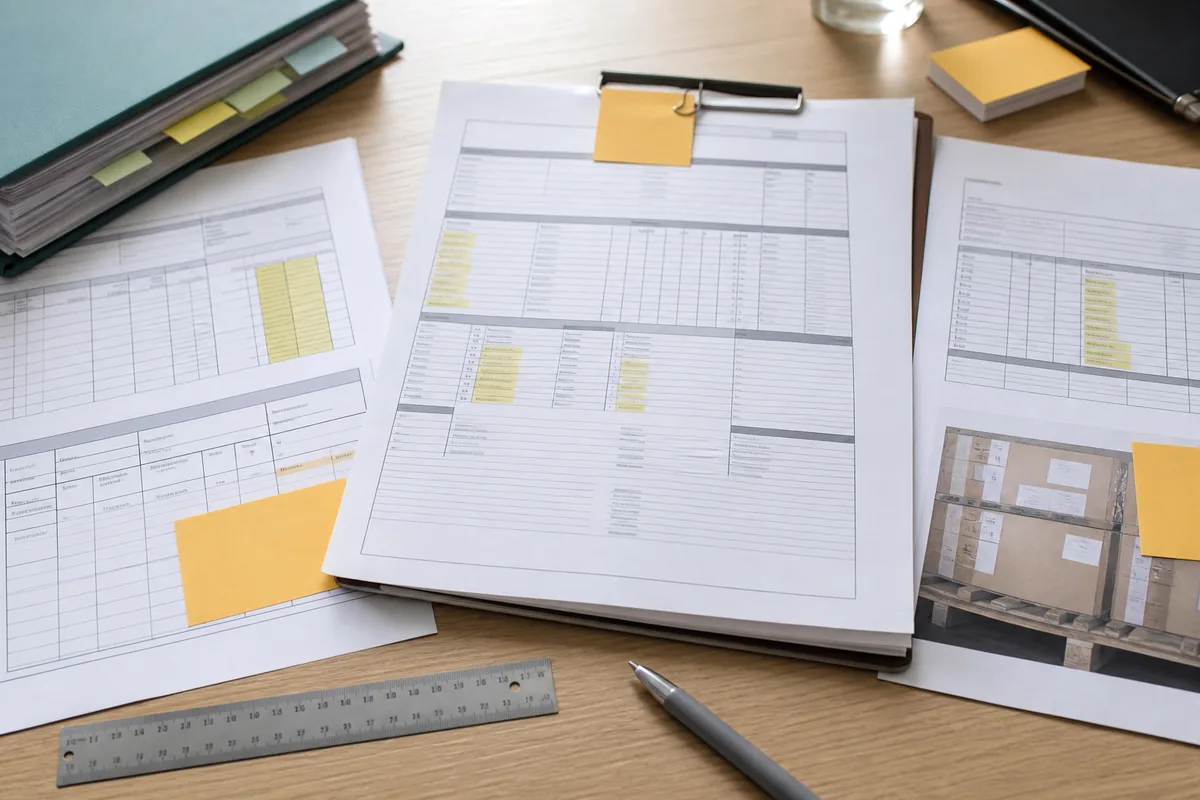
/ sample shipment / broker question / invoice wording

Broker Asks if Sample Is Commercial Goods

Sample status questions should be tied to value, use, recipient, and invoice wording.

Broker Asks if Sample Is Commercial Goods starts when a buyer notices a broker asking whether a sample shipment is commercial goods. The order may still look normal, but broker sample commercial-goods question changes what another person will need to prove later. Put the issue next to the PO number, supplier legal name, current document version, and the person asking for deposit release. For broker sample commercial-goods question, that keeps the review concrete before the supplier's deadline takes over.

For broker sample commercial-goods question, the first pass should stay close to the documents. Compare sample invoice, courier record, product use note, customer approval, declared value, and supplier explanation. Mark the field that moved in the broker sample commercial-goods question file and keep the earlier version. A clean replacement file can be useful, but the rougher version explains why the buyer reviewed broker sample commercial-goods question in the first place.

A supplier may label samples as gifts, no-charge goods, or commercial goods depending on courier habits. The buyer does not need a long memo. The buyer needs one plain sentence: whether the sample description matches value, use, and recipient. If that sentence cannot be written from the file, deposit release should wait until the missing record is added.

Ask sourcing to check the part of broker sample commercial-goods question that their team will use. Finance should not guess from a sales chat. Logistics should not guess from a corrected invoice. The broker should not receive a cleaner story than the one inside the buyer's own shipment folder.

The control question is narrow: can the broker understand the sample without guessing from courier labels? If the answer depends on memory, request a packing list, a dated supplier answer, or a revised document before the next step. Broker Asks if Sample Is Commercial Goods uses the same rule: a buyer can accept a small exception, but the file should say why it was small and where the exception ends.

Supplier identity still matters. For broker sample commercial-goods question, list the seller, factory, exporter, payment beneficiary, certificate holder, and message sender when those names appear. A broker asks if sample is commercial goods review should keep this plain: if one name does not connect to the order, write that gap down instead of treating it as a harmless formatting issue.

Payment and shipment records for broker sample commercial-goods question should tell the same story. When broker sample commercial-goods question affects value, beneficiary, carton count, origin wording, product description, freight charge, or claim credit, attach the buyer's decision to the commercial file. When a buyer reviews broker asks if sample is commercial goods, a later dispute usually starts with a small field that no one named at approval time.

Keep the language boring and useful. When a buyer reviews broker asks if sample is commercial goods, avoid labels such as trusted supplier or standard practice unless a document supports them. For broker sample commercial-goods question, use product name, company name, document field, buyer decision, and next control. When a buyer reviews broker asks if sample is commercial goods, that is the language a broker, warehouse clerk, or new buyer can use without replaying old messages.

Close broker sample commercial-goods question with a file name that will survive staff changes: PO number, supplier name, issue type, document version, and date. Store the note near the sample import folder. When a buyer reviews broker asks if sample is commercial goods, screenshots can stay in the background unless they prove the changed field or the supplier's answer.

Before the file closes, write the broker sample commercial-goods question decision beside the document that controls the next step. On broker asks if sample is commercial goods, the file should let a later reader answer four questions: who asked for the change, which document moved, which approval followed, and which risk remains open. If the folder answers those questions, broker asks if sample is commercial goods becomes a working trade record rather than another tidy document with the decision missing.

For broker asks if sample is commercial goods, the strongest review is often short. The broker asks if sample is commercial goods file needs this point: it connects the supplier message to the commercial document that matters and leaves enough evidence for finance, logistics, brokerage, or a later claim.

Start with the decision deadline for broker asks if sample is commercial goods, then work backward. On broker asks if sample is commercial goods, the buyer should know whether the next shipment document action is a supplier answer, broker reply, inspection check, finance approval, or shipment hold. That timing note keeps this broker asks if sample is commercial goods issue from drifting between teams.

The broker asks if sample is commercial goods file needs this point: build the baseline from records already in the order folder: commercial invoice, packing list, carton marks, booking note, forwarder messages, and draft transport document. Read them together. For broker asks if sample is commercial goods, the useful clue is often the field that changes between two documents, not a dramatic warning in one document. Mark the controlling field, the revised field, and the person who approved the final broker asks if sample is commercial goods version.

On broker asks if sample is commercial goods, a carton count, gross weight, named place, or cargo description that changes after booking is the point where the buyer should ask one more question before approving the next step. A supplier may have a valid reason. The broker asks if sample is commercial goods file still needs the reason in writing, tied to the affected document and saved beside the final approval.

Working checklist

  • Keep the earlier document version.
  • Name the changed field.
  • Tie the decision to PO or invoice.
  • Assign the next owner.
  • Store proof beside the final file.

Sources used for this guide